Monday, August 20, 2012

The Davie spider technique and beyond.

  I have been hooked lately on tying using Davie Mcphails spider technique as a base model.  It makes some really nice ties such as the jungle spider, but I have been doing it with all sorts of feathers and different bodies, tags, ribs, you name it.   You can see Jungle spider tutorial here for an understanding on how to do this. You can also check out Davie's video here.   Ok so here are some patterns I have put together and some I have fished with some good catches.

Hook- Alec Jackson soft hackle hook #9
Thread- Uni 8/0 black
Body- Sparse otter dub
Rib- montana fly co, midge body thread, rust.
Tag- Red holographic tinsel
Wing- India grizzly hen
Hackle- India grizzly hen

I gave the rusty indian a go on my local spring, I picked up a couple of browns, but the trout quickly became in tuned to a bwo spinner fall. So i swapped out for a rusty spinner. I will be fishing this fly a lot more.  If your unsure where to score india hen capes try here and get free shipping to boot.  Be sure tell Dave Johnny sent ya.


Hook- Alec Jackson soft hackle #11
Thread- Uni black 8/0
Tag- Utc sparkle braid midge, peacock
Rib- fine silver wire
Body- Sparse beaver dub
Wing- Badger 
Hackle- Badger


Hook- Alec Jackson Soft hackle- #9
Thread- Uni 8/0 black
Tag- Small lagartun gold tinsel
Rib- Small Lagartun gold tinel(same piece as tag)
Body- *india bronze* peacock  This hurl has no green to it, only copper and bronze tones. 
Wing- pale furnace(greenwells) hen
Hackle- pale furnace(greenwells) hen

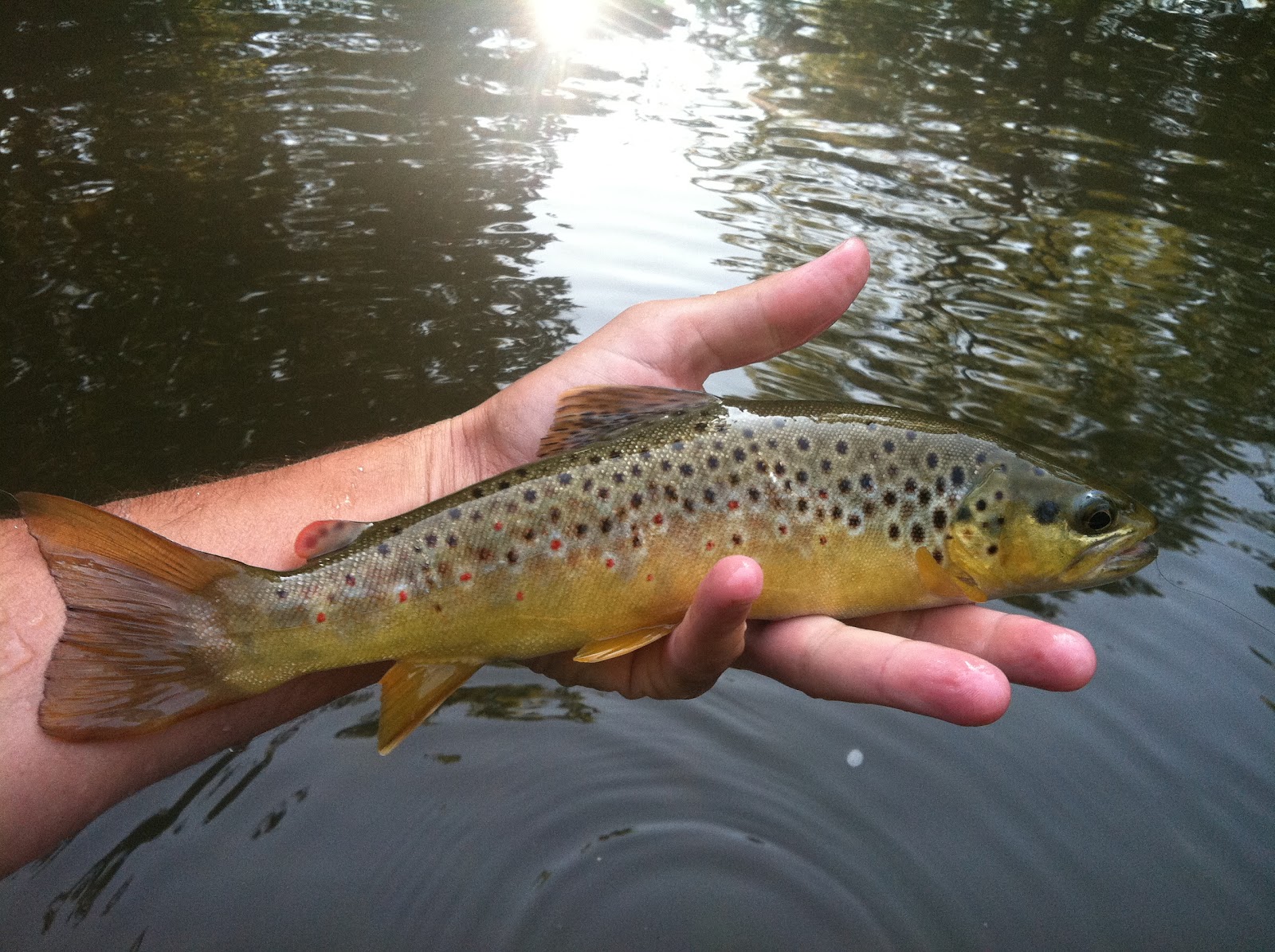
I have used this fly several times on the Saucan creek in Pa. It is a limestone spring creek, with gin clear water and finicky brown trout. I will just say it got me "more than four" each time. I was gonna keep a secret but what fun is that?  I fished it in the film and got some really nice browns with it.  I have been fishing quite a bit, but just havnt been posting reports or taking many pictures.  But what is a post without fish porn. 


 Just a couple of browns taken with the saucan secret. The gelatinous one in the middle missed it on its first strike and chased it down and slammed it. That one and the others put up a great fight on my 2wt.   If you like the alec jackson hooks contact j.w.trout and you can score them for a good price.  Be sure to tell'em Johnny sent ya.

Friday, August 10, 2012

Duck, Duck, Badger spey fly


Here is a spey fly I put together, i am hoping to get up north this season at some point. 

Hook- Mustad 36890 #6
 Thread- Amber pearsals
Tag- Mirage tinsel
2nd Tag- Medium gold oval tinsel
Body- Very sparse dubbed muskrat
Body hackle- silver badger
Rib- Medium gold oval tinsel
Hackle- Yellow mallard flank
Throat- Gadwall flank small
Wing- Bronze mallard
Eyes- Jungle Cock

Thursday, August 9, 2012

The Jungle spider tutorial

 Here is a wetfly that I put together after watching Davie Mcphail do his spider pattern.  It is simply a variation of Davie's creation.  The pattern is an easy and simple tie, but just take it slow with the wings. The Davie spider consists of starling and you can see my version the Jungle spider consists of jungle cock.  


The tutorial can be vied by clicking the see the rest link to the right


Saturday, August 4, 2012

A quick evening marauder attack

Well got out for a very short session yesterday evening with a friend. We hit my local tail water. We stirred up a couple of brookies. I was fishing the marauder and my friend was using a dry fly. The darkness closed in fast in the woods as suspected. It was a fun brief session and the fifty degree water felt great.


Sunday, July 29, 2012

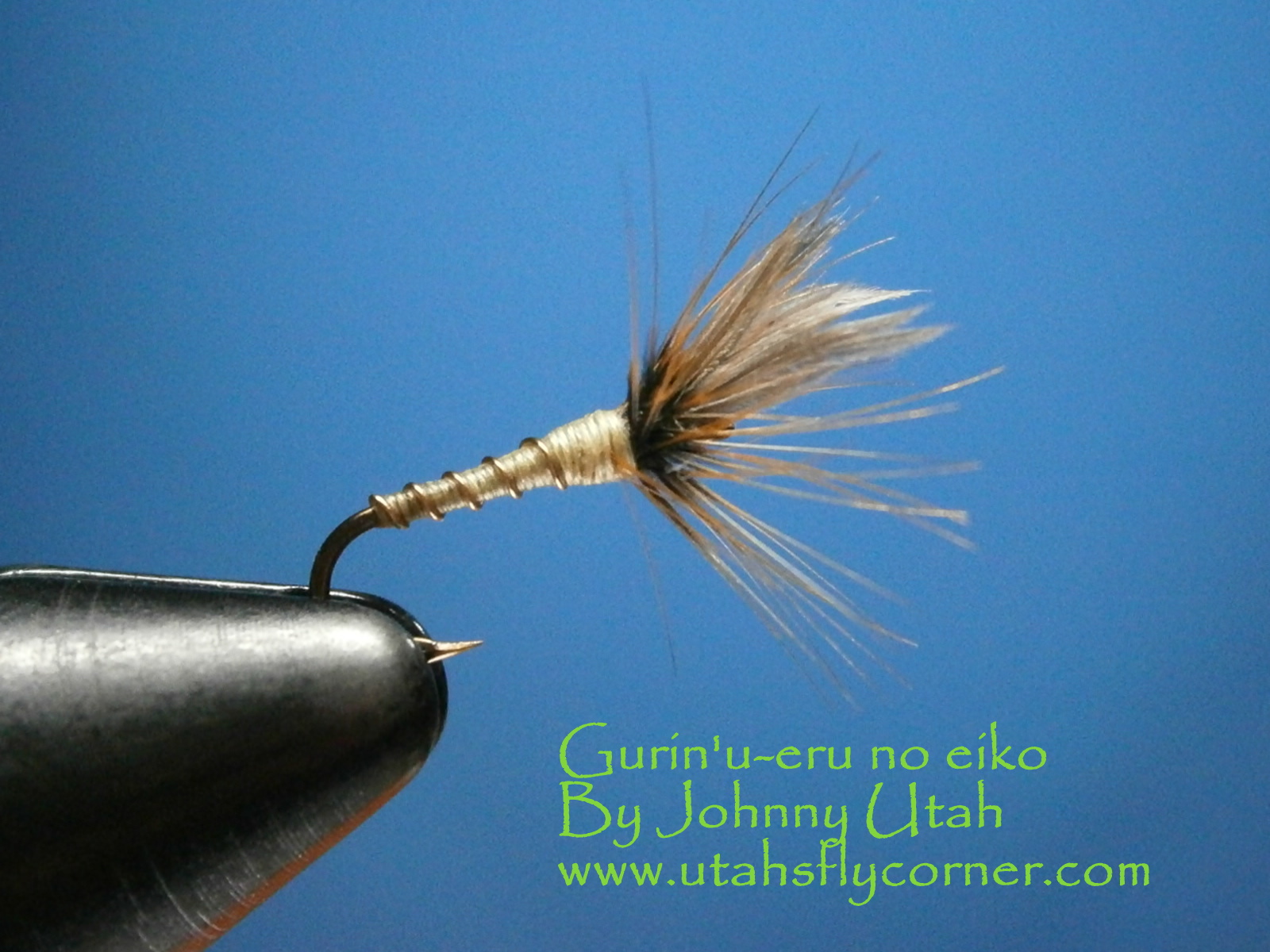
Tenkara glory, The Gurin'u-eru no eiko

Here is famous Greenwell's glory(gurin'u-eru no eiko) done up reverse hackle, aka tenkara style. Dont see why this baby wouldn't retain all of it glory.


Materials
Hook- Daiichi 1110 #16
Thread- Primrose pearsalls waxed
Rib- Gold wire small
Body- tying thread
Hackle- Furnace hen
Wing- Folded mallard.

Tuesday, July 24, 2012

Tenkara Fly-The Aka Kayobi

Materials

Hook- Daiichi 1110 #16

Thread- Red silk

Body- sparsely  dubbed muskrat

Hackle- Brahma hen, Natural molted grey. (dark dun)

Monday, July 23, 2012

Tenkara premiere tying video! The Gin Seisho

  Here is my silver star aka Gin Seisho.  I put this pattern together some time ago but never fished it much other on occasions on one of my wet fly rigs. It was the only fly I fished the other day and well, as I said in my fishing report, it was all i needed. The fly is rather effective and in the spirit of tenkara it is simple to tie.   I really like this style of tying. It makes for some really effective wet flies. The hackle being the way it is, gives the fly a ton of movement, that just drives the fish bonkers.

  I fish this fly from top to bottom and have caught trout in all areas of the water column. I had good success with it in the film too.  Just a touch of dilly wax and she floats fine in the film.   Enjoy the video and be sure report back with how the fly did for you on your waters.


Gin Seisho

Materials

Hook- Daiichi 1110 ( great price at Jw trout on this model)

Thread- Pearsall"s gossamer silk- black

Body- tying thread

Mid tag- Mirage tinsel, small

Hackle- Brahama hen saddle natural

Dub- Fluff from bottom of feather.

Sunday, July 22, 2012

Tenkara flies, The Bonten Risu and The Bonten Orenji

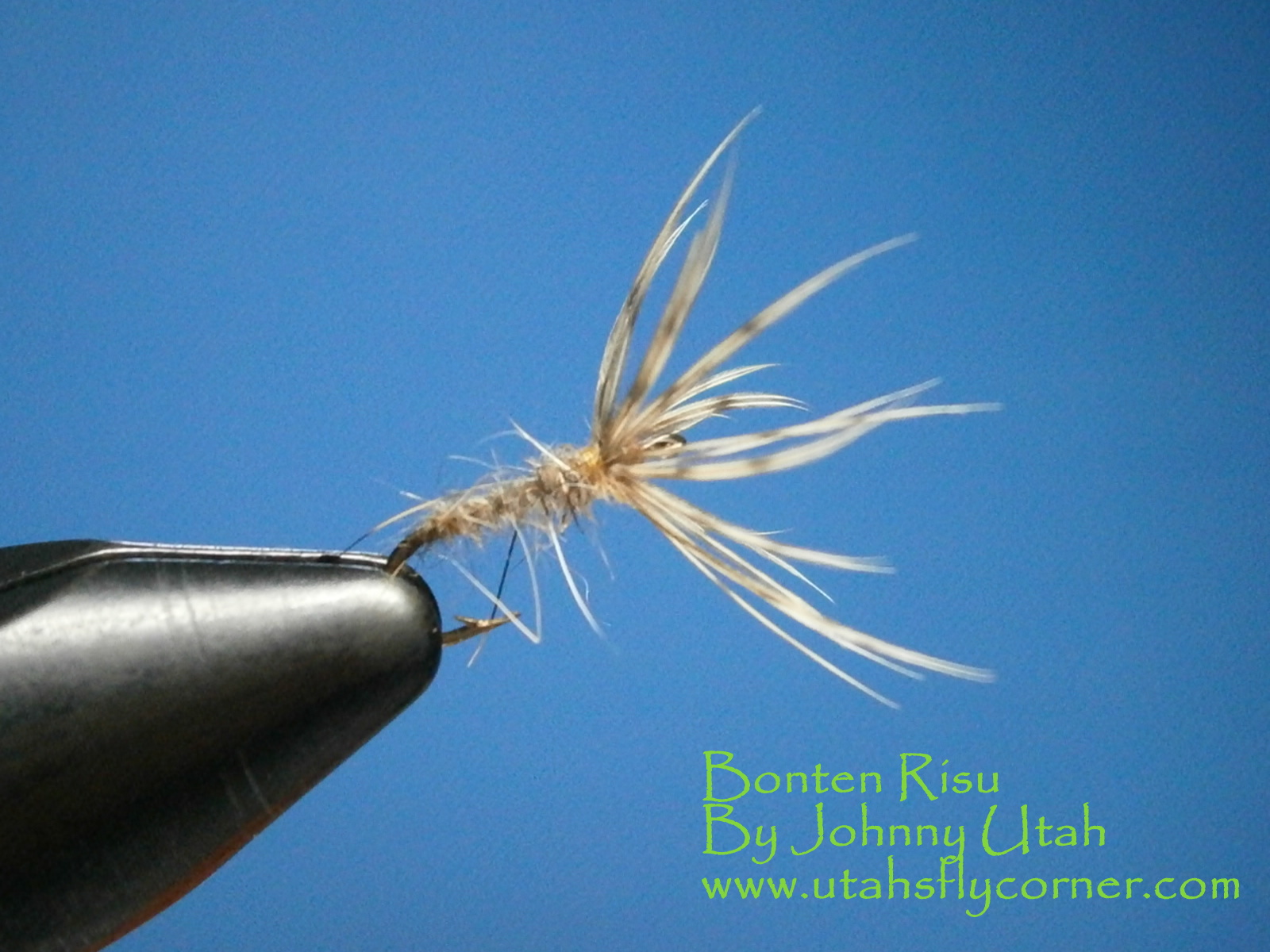
Bonten Risu, boast a sparsely dubbed body of fox squirrel dubbing, sparse enough that the thread bleeds through. A real nice buggy fly to drive the trout nuts. 

Thread- Pearsall 6a

Body- fox squirrel dubbin

Hackle- Pale yellow Brahma hen.


So what i did here in creating the Bonten Orenji, was to base it off the English spider pattern the partridge and orange.  Added a dubbed head, and changed the partridge for pale yellow Brahma. The silk and waxing it are the only similarities to the partridge and orange north country spider.   Here is the recipe.

Thread- Pearsall 6a waxed

Head- Fox squirrel dub

Hackle- Pale Yellow Brahma Hen saddle


Be sure to give me feedback on how these flies work for you, and have fun tying them.


Tuesday, July 17, 2012

A golden age fly, The Marlow Buzz, tutorial


Here is a truly old pattern. This fly dates back to the 1830s. It is known as the Marlow buzz or lady bird. Back then a "buzz" was a term for an emerger or wingless fly.   However this fly was intended to imitate a winged beetle.   Here is an excerpt  from fly anglers online.
"Edward Fitzgibbon, writing as Ephemera, said in his Handbook of Angling, 1847, 'What is called the buzz form, is an intended imitation of the natural fly struggling and half drowned. A fly with erect wings and one without them, or buzz, may be used on the casting line at the same time, the buzz imitation being the stretcher or tail fly.'

Ephemera also says: 'Some persons call this fly the Marlow Buzz, others the Lady Bird. At any rate it is intended to imitate a small winged beetle.'


You can read more about the fly here.  At any rate you can know this fly is a producer as it is still tied and varied in many different ways. As a matter of fact the starling and herl can be traced back to the buzz.  It is a rather simple tie, so let's twist one up!  Click read more for tutorial


A one feather fly

  Here is my latest video. It is a one feather fly that i tie up and use often for small mouth, well when i go under.  It is a very simple, easy, and fast to tie, and best part of all the fish approve. I mean what fish can say no to marabou. The feather i use for the fly is a "bird fur" feather.  These feathers are put out by whiting farms for the spey community.  They are excellent feathers for making some great action flies. My sponsor Casters fly shop carries it and with free shipping you cant go wrong. 
  I fish the fly dead drift with twitches, and fish it just like any other streamer.  The fly will hold well if you rib it, but not against the real toothy critter crowd. The action of the fly in the water is great. The fly pulsates and when pulling the fibers consolidate and form a nice slim profile that certainly gets some attention.   Twist them up in what colors you can get. I like black, brown, grizzly, heron grey, chartreuse, olive, and white.  The best part about the fly, is the more sloppy it is the better. So dont worry about trying to make this one pretty.


Sunday, July 15, 2012

The Picket Pin video


Materials
Hook- Daiichi 2220 #10
Thread- Uni 8/0 black
Tail- Golden pheasant tippet
Body- Holographic gold tinsel
Rib- Medium oval tinsel
Body hackle- Brown rooster hackle
Head- Peacock herl

Saturday, July 14, 2012

Foxy Starling wet fly with tutorial

  I call this fly the Foxy Starling.  I put this baby to the test and the wild brown trout approve.  It is a hair wing wet fly. The wing consists of fox squirrel tail fibers. The hackle is bleached starling. Bleach starling has a wonderful copper iridescent to it.     I have had luck with the fly on the dead drift and also dancing near the surface.  That sexy hook is a Alec Jackson Soft hackle hook. I really like the hooks. They hook and hold fish great, and like all daichii hooks they are incredibly sharp.


Materials
Hook- AJ soft hackle hook #11
Thread- Rusty brown MFC 8/0
Tail- Wood duck flank 
Body- Wood duck flank wrapped
Rib- MFC midge body thread- #740 rust
Hackle- Bleached Starling
Wing- Fox squirrel tail
 Lets twist one up, click read more

Sunday, July 8, 2012

The Picket Pin, with tutorial

A 1910s era picket pin, tied by Johnny Utah

  The picket pin is rather well known fly that has stood the test of time. The fly was originated by Montana fly tier Jack Boehme, owner of a Missoula tavern and tackle shop.  That must have been pretty cool, go pick up some flies and have a beer or two.  I'd be more interested in those fish tales told at flies shops if i was guzzling a beer! Anyways.   The fly featured here in my tutorial is the one believed to be the original from around 1910.  However the original was tied with a gopher tail wing, but grey squirrel is a darn good match. 
A peacock body picket pin. Tied by Johnny Utah
  There are many different variations of the picket pin, most have a variation in body materiel.  I am sure you have seen or have tied and/or used the peacock bodied picket pin. Which tied to size is deadly around this time of year with the iso hatches.  The tie here is more of an American tradition, you know our original fly patterns, Streamers.  The fly can be tied with different color wings as well.


The fly is extremely versatile. Fish it as a streamer, a nymph, a dry fly, whatever you can think of, it has probably already been done with the fly.  Fishing it dead drift with twitches is a favorite amongst eastern anglers.   It is fun tie, and when you catch a trout, thank Jack for his creation.

Originator: Jack Boehme,
Hook: Mustad  79580, or equivalent, size 4-6.
Thread: Black 8/0 Montana fly co.
Tail: Golden pheasant tippet fibers (3-5).
Rib: Medium gold french tinsel.
Hackle: Brown rooster neck palmered over body.
Body: Flat gold tinsel.
Wing: Gray squirrel tail.
Head: Peacock herl.
Click read more for the tutorial 

Wednesday, June 27, 2012

A female slate drake cdc fly (Iso)

The female isonychia is often a shade of brighter colored olive when first hatch. It will then darken up into the more well known colors of the iso. With this little piece of knowledge comes more takes, because if females are hatching, your gonna be pressed to be putting up numbers with a rusty or mahogany dun. Tossing this fly around has brought me some great luck when I see a slate drake emerge. 
 Materials
Hook- Daiichi 1180 #12
Thread- Olive 8/0
Tail- chartreuse dyed grizzly hackle fibers
Body- Pale evening dun and brown dry fly dubbin blended
Post- 4 dun cdc feathers
Hackle- MP cdc dirty yellow.
 

Tuesday, June 26, 2012

Tying Johnny's heading to hatch Iso Nymph(video)

In this video I tie my hth iso. I call it the heading to hatch iso because of the black wing case. If you ever sample nymphs from a stream prior to an emergence, you will find with dark wing cases. Many times if you fish a nymph with a dark wing case you will get quite a few more takes.
   You can sub out the wing case material(turkey) for a synthetic material like silly skin or scud back. I like to use the turkey because I have a lot of it. Don't be fooled by the length of the video, I do a lot of explaining for the various techniques thought the fly. Once you have it, they are a rather quick tie that's well worth it. The stripe is optional, but I strongly recommend using a grey stripe. A white stripe while disappear when wet. The technique for the legs one the fly is a great one to learn. I use it on a lot of my nymph patterns.
   Fish this fly in tail outs and riffles and good moving runs. Isonychia nymphs are excellent swimmers, they are fast. Be sure to apply action to fly via rod twitches, swinging, and stripping. You can fish them dead drift and still pick up fish, after all the nymphs have to stop swimming at some point. Enjoy.


 Materials 
Hook-daiichi-2220-#12-#16. I like #14 best 
Thread-brown 16/0 or 8/0 
Tail- brown mini marabou or chickabou. 
Abdomen- brown bou 
Rib-black utc wire brassie 
Stripe-light grey life flex. 
Wing case- black section of turkey tail tip
 Legs- dark partridge Thorax- peacock herl.

Saturday, June 23, 2012

Super hair trico spinner.

Got the notion from a forum for using super hair for spinner wings. So I gave it a go for a trico spinners.

Saturday, June 9, 2012

Mayflies and a Yellow sally

These guys have been hatching lately on my local waters. There is a cahill, bwo, sulphur, and a blue quill. Theres quite a few pics so dont forget to click the read more.


Sunday, May 27, 2012

Tying Johnny's quick bugger video

 Seeing how i am tying all these buggers for the cold water conservation school in June(see post cold water conservations school needs) I figured to help out anyone who like to tie some for the kids by making a video on how i do my quick bugger. Its a very simple bugger that takes hardly any time to tie at all, once you get the hackling technique down.   A rotary vise is necessary for the technique.


  The beauty of the quick bugger is that it only requires 2 feathers and thread.  The bou secures the hackle so the fish dont break it, and the flies are so quick and simple that who cares if  you lose them.  If you wish to add flash to fly by all means just add that step in, no doubt the flash can make all the difference some days.  Ok well  I am rambling like I do in my videos, haha.  Enjoy the video.   Thanks for stopping by the fly corner.
Materials
Hook- Your favorite bugger hook(mustad 79580)
Thread- Black mono cord
Weight- fine lead wire
Tail- Black Marabou
Body- Black Marabou, butt end of feather from tail
Hackle- Grizzly dyed olive rooster neck hackle. (the whiting bugger packs are great)

Saturday, May 19, 2012

Another March brown wet fly

Materials
Hook- Daiichi 1560 #12
Thread- uni 8/0 orange
Tag- Gold Holographic
Tail- Bronze Mallard
Rib- Oval gold tinsel
Body- Fox squirrel dub. Cut up very fine
Hackle- Dark Partridge
Wing- Pheasant wing slips.

With the dubbin cut up fine the orange thread bleeds through wonderfully. Just dub it very lightly. The tag is just to add some flash. Sometimes that can make all the difference.

Thursday, May 10, 2012

The Double wing Rusty spinner video

  Here is my latest video. The double wing rusty spinner. Its a version of Ellis's triple wing spinner. The fly is extremely durable and floats great. Plus the trout, especially spring creek and limestone, really like the fly.  The fly is a quick tie, so dont let the video time scare you, I just rattled on a bit about things.   I use dun colored wings and tails on almost all my spinners. I agree with what is written in selective trout, something along the lines of the dun being preferred by trout.  Have you ever seen a real spinner with white wings????  Spinner wings are clear but the dun color surely isnt. However on the water flush against the film, it does look the part as compared to a white wing.  Just something to think about.......... Anyway, Enjoy the video.

Materials
Hook- Daiichi 1170 or 1180 sizes 16-22
Thread- Montana fly co Rusty Brown
Rib- Uni 8/0 Rusty brown, also try camel, olive dun and dark brown
Tail- Dun hackle fibers
Wing- Dun Niche siliconized poly yarn.


Saturday, May 5, 2012

Spring session 8, Brief but great.

  Got out early this afternoon with Fredy after we did some planting and stream restoration. I will be doing a post on that soon. So Fredy and I hit my local spring creek for some quick dry fly action. It didn't take long before Fredy had one take his bwo dun.  I was using the Dark Star and got my first brown it and then on my next brown I lost it to him. The curse of the dark star continues. I an never keep one of those flies on my tippet, but they sure do work well, so i will continue to tie and use them.  Then we both swapped out for rusty spinners and we both got into fish with them.  Time ran out and I need to head on home so the session was over. It was good time on the water. Didn't see many bugs about, just the occasional caddis and the always present midges.


Friday, May 4, 2012

Spring session 7. Rusty Spinner and soft hackles

Got out for some flying on my favorite freestone stream. The fishing started off slow but picked up when Bwo spinners began to fall I tied on a double wing niche rusty spinner (video will be out soon). I fished the late morning and right into the afternoon the Bwo spinners just kept falling.

I began seeing the occasional sulphur pop off and a fish flash here and there. So I tied on a team of soft hackle again. I tied the biot sulphur soft hackle on as lead and the sulphur emerger soft hackle as point with two size 6 split shots to get me down in the deeper swifter runs. I dead drifted the flies above me and past. The I would throw a belly of line down and stream and allow the flies to swing from the bottom to the top.
It was early in the sulphur emergence so the majority of the fish took the flies on the deep swing. I worked my way down stream fishing down and across as the hatch got heavier the trout began to take near the surface and less down low. So to get the ones near the surface I simply took the shot off the line. I have used this technique for sulphur hatches for quite time and it hasn't let me down yet. Give it a go when you notice the things I describe before and get ready for some hard hitting takes! Fishing was hot right up till dark. With light rapidly fading and "more than four" I headed on back to the car. It's sure is great in being a swinger. ;)

Spring Session 6, bwos, sulphers, and cahills

   I got out on the mighty musky here in New Jersey for some flying in the evening. Oh man was there a hatch. There was tiny bwo's sizing around a 18-20 and there big brothers sizing in about #16 in a deep olive.  The fish were in tuned with the blanket that these guys formed on the water. A little bwo dun fly did the trick.  Then the fish switched to the larger bwo, so a nicheo was tied on and back into fish.  The occasional sulphur started to hatch and the rise forms became more tell tale of the taking of emergers.  I tied on a team of the emerger sulphur and the biot sulphur softy and began swinging.  The hits just came one after the other. The fishing was hot to say the least and to my surprise the occasional cahill would drift by me.  The swallows were swooping the cahills that stirred in the eddies of the stream banks. There were several baby mallard ducks having a field day eating the bugs. It was a prolific hatch for sure. 

 With so many mayflies hatching dont be without spinners on your next outing. Bwo spinners fall late morning with many species and the sulphurs will fall in late evening. So if your seeing rises and dont see whats doing, give a spinner a try.

My only wild brown of the evening


Wednesday, May 2, 2012

Ridge and Valley T.U. Fly tiers round table, Sulpher Emerger video


   Well last evening was my T.U. chapters second tiers round table meeting. It was a good turn out for the event.  At the meeting I demoed and gave instructions how to tie a great emerging  sulphur soft hackle that I have been tying and using for some time. The fly can be fish dead drift in the film, bounced on the bottom, fish as a dropper off a dry fly and on the swing. A leisenring lift is particularly deadly with this fly. 


Special thanks to the M.W.A. for allowing us to use there amazing building check them out Musconetcong water association

Here is the video of the fly I last night, and thanks to everyone for coming out. Hope to see you all next month! Enjoy the video.
Materials
Hook- Daiichi 1110, 1180, 1560  sizes 14 and 16
Thread- Uni- 8/0 Light cahill.
Tail- Pheasant tail fibers
Rib- Tag of tying thread
Abdomen- Pheasant tail
Thorax- Lite yellow U.V. Ice dub.
Hackle- Dun hen neck hackle ( Whiting hen is great for this pattern as it will help the fly stay in film)