Monday, February 4, 2013

Sparkle Midge pupa, tutorial

 This is a very simple yet extremely effective pattern. It is a great fly for midge pupa and the trout agree. I never go to any limestone stream without this pattern in my midge box.  I first heard of this pattern through the writings of Gary Borger quite some time ago. The fly goes hand in hand with the g-gnat. Give me a box with g-gnats and sparkle midge pupas and ill catch trout on any spring creek or tail water. 
  Tie these guys up in small sizes ie 20-26, and use different colored threads for different effects as the body is translucent.  Be sure to tie them in red, yellow, black, olive, and brown.
   Fish them with a greased leader(floatant on the leader) or dry dropper, whenever you see trout making those midge rings, and be sure to be ready, cause you will be surprised sometimes at the size of trout you can catch while midging. 

Materials
Hook- Daiichi 1110 20-26
Thread- Black 8/0
Rib- x-small silver wire
Body- Clear(white) or cream antron


Friday, February 1, 2013

Wiggle Nymph video, Hendrickson

Materials
Hook- Daiichi 1150 #14
Thread- Uni 8/0 camel brown
Tail- Ostrich herl brown
Abdomen- ostrich herl brown
Thorax- Brown rabbit and antron blend
Wing case- Flat diamond braid, black
Hackle- Dark partridge

You can tie this fly in all sizes and colors. Also tie them with several different colors of strands of herl  for some great  effects.     Fish this fly in slower waters, with a leisenring lift or with an active retrieve.   Key factor is giving the fly action, working the fly so to say.


wiggle nymph (Hendrickson)

Editing the wiggle nymph video. Hope to have it done by the end of the day


Tuesday, January 29, 2013

Hendrickson flymph video

Materials 
Hook- any dry fly hook will do 12-14, but I really like and use the daiichi alec jackson soft hackle hooks 9-13
Thread- Uni 8/0 tan
Tail- bronze mallard flank
Body- Pink floss
Rib- Tan Australian opossum cut up fine and dubbed on thread
Hackle- Honey dun hen neck, preferably light honey dun.

Tuesday, January 22, 2013

The Willow Nymph Tutorial


 If you have been following my postings here, then you know the willow nymph is a pattern that I keep fine tuning and I believe I have it mastered finally.  The final version which is still subject to change lol, has served me quite well on the freestoners in the area. I am sure it will produce great all over the place. It is a great pattern for fishing this time of year, with all the stones around in great in numbers. The willow is a close match to the early black stone nymph and tied in different colors can match many different stoneflies. So twist a few up and give them a go.
  
 Materials
Hook- Daiichi 1560 #14-16
Thread- Uni 8/0 dark brown
Tails- Moose main, optional
Rib- Small brown wire
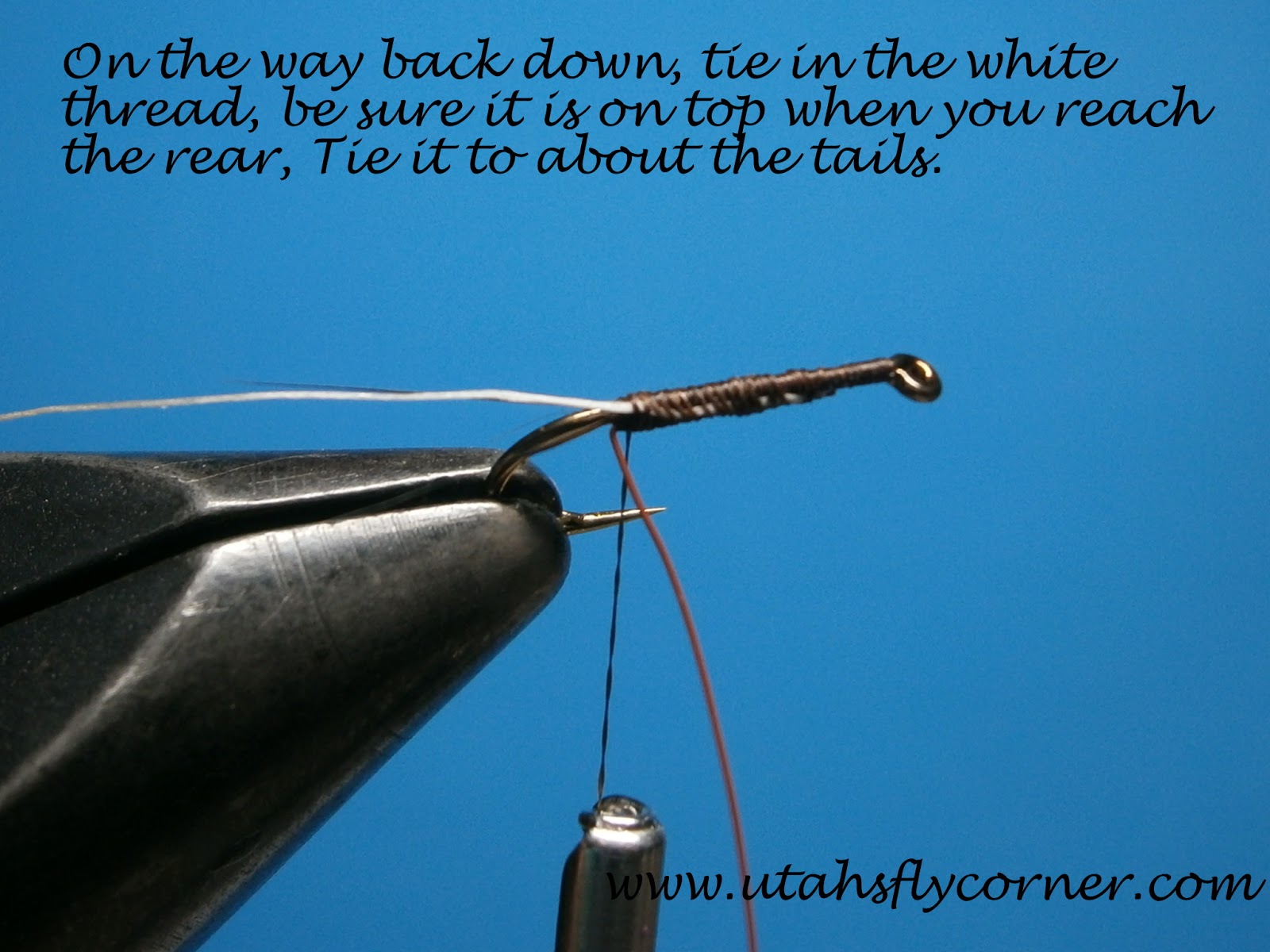
Stripe- Uni 6/0 white
Abdomen- Dubbing, Blend is 2 parts(pinches) brown rabbit, and 1 part each- black rabbit, sts black and fiery brown.
Wing case- Dura skin, brown
Legs- extra fine round rubber, 2 pieces of Senyos shaggy dub is perfect
Thorax- Dubbing blend
 Head- Dubbing blend

Lets twist one up


Saturday, January 19, 2013

Johnny's simple stone tutorial

 There is no doubt in my mind that stone fly imitations are a nymphers deadliest flies on fertile freestone streams of the northeast, and many other streams through out the world.  Several of my favorite local streams have a very large amount of stone flies, with many different species of stones.  The biggest reason why stone fly imitations are so effective is because many stone fly species take years to mature from a nymph till they are ready to hatch into the wing adults. What does that mean to the fly fisherman?  It means the trout have stones to eat year round and they are very familiar with them.
   Stone fly imitations, while they will work all year round, they become even more effective in hatch time. At this time the mature nymphs become quit active and by doing so they become more available for the trout to gobble up. The vast majority of stone flies crawl to the edge of streams or in streams debri structures to climb out of the water to hatch. What does this mean to fly fisherman? This means trout will stage along banks and structures waiting for the nymphs come to them.  Next time your on the stream, pay close attention to sand bars and work those banks.
  It is now January, and the little black stones and the tiny black stones are making there presence known.  For the little aka early black stone I use my willow stone imitation but as of late I have been nymphing with an fly pattern I know call the my simple stone.  It is designed to imitate the tiny black stones found on many streams in the area.  Many winter fly fisherman fail to notice them and many mistakenly call a flying adult a midge. After all, they are tiny.
  I am a firm believer that simple is best when it comes to effective flies for trout, and the simple stone fits that bill.  All you need is thread, midge ice braid, and very small rubber, for the legs.  So lets twist  one up already!

Hook- Daiichi 1550 #16 
Thread- Montana fly co Midge body thread black
Abdomen- Tying thread
Thorax- Tying thread
Wing case- Midge ice braid, root beer
Legs- micro rubber, senyo's shaggy dub works great, black

Start the thread back two hook eye lengths from the eye and wind back to the barb and then back to where you started.


Take the midge ice braid and pull the braid apart, dont worry, the materials are bonded together and by pulling it apart you are simply flattening the braid out.  Once you have this done,  fold the braid around the thread and bring the thread around the shank placing the braid on top of the shank. Wrap back over braid tying it in to the middle of the shank.


Wrap the thread forward and back till you even out the thorax. Dont worry if its kinda bumpy at this point.


Take a single piece of rubber and fold it around the thread and bring the thread around placing the rubber on the far side of the shank. Do the same with another piece of rubber for the near side. Then hold the back legs back and wind over them tying them back to about where the braid is tied in. Bring the thread forward  tying the front legs forward to about a hook eyes length back from the eye, then wrap in front of the legs to make them flare out.  In the photo i pulled the front leg out of the way of camera.


Now bring the braid over the top, and give a good pull as you bring it over to flatten it out. Tie it down with two turns on and one in front. Snipe the excess and wipe finish.


Now trim the legs, I like to trim the back legs to just past the abdomen, and the front legs I trim just beyond the eye of the hook.  You dont want long legs as they will just get tangled in the bend of the hook.


You now have a simple little stone fly.  Fish them slow on the bottom and be sure to cast them near banks, and be ready for some hard strikes!  But pay close attention cause some of those strikes are super light.

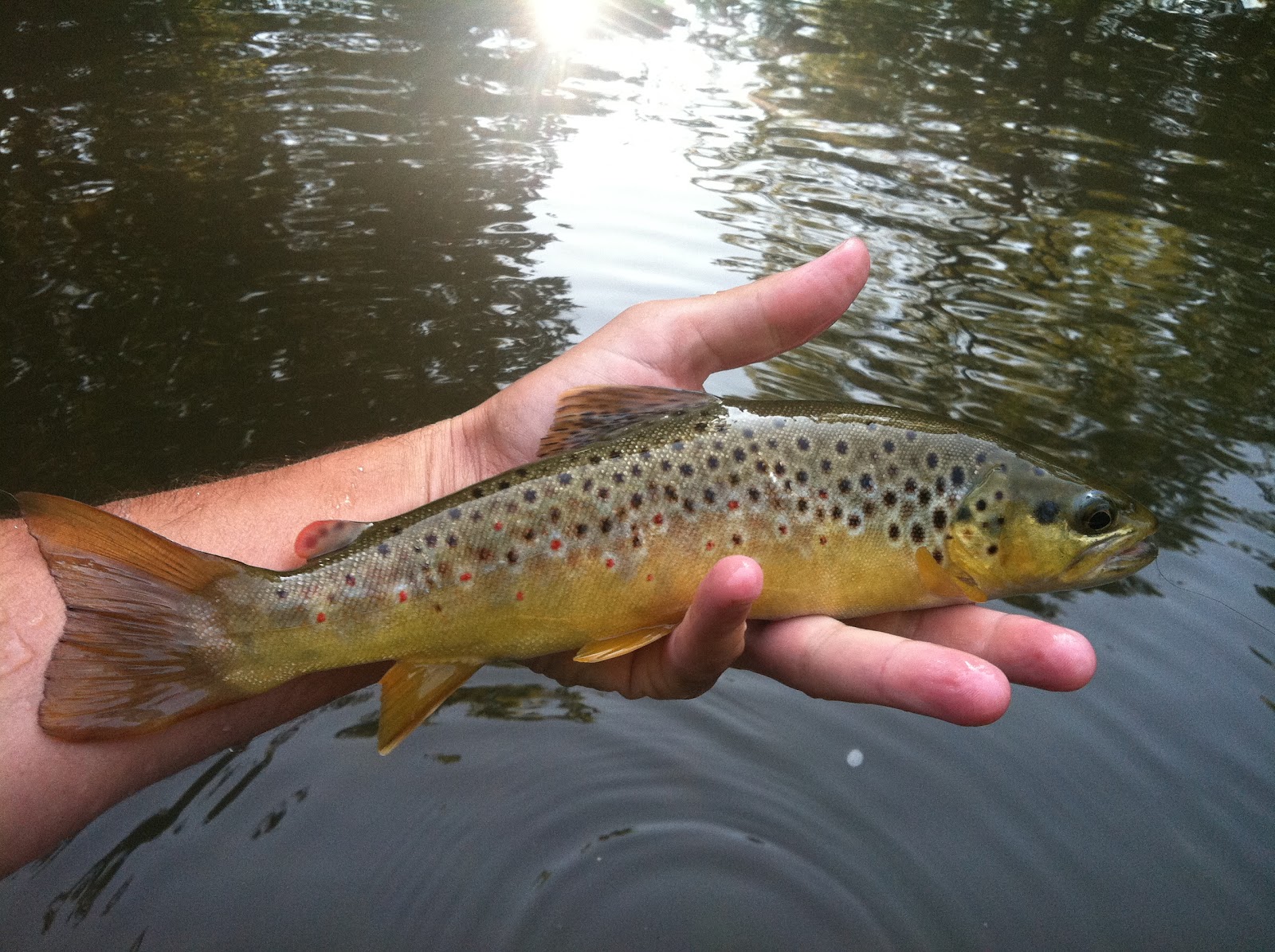
This 18" brown took the simple stone, no doubt this brown grew as large as he has by eating many stone flies over the coarse of his life.


Monday, November 26, 2012

The biot rock worm video

 Here is the video for the biot rock worm I tie and use. It is a rather simple tie, and quick, so don't be fooled by the time of video. I used this pattern this past black Friday and it is the fly that the large male brown trout took. It is a pattern I use often on freestone streams that have a lot of caddis.
   When tying these. You should tie ones with a black or dark brown biot on top also. The rock will color up when it gets close to time for metamorphosis. In the winter I use all green and the spring and summer, I use ones with the dark front upper.
   I like to fish these flies, dragging on the bottom. Sure I lose them, but I have found its the best way to fish a rock worm pattern.  Well enjoy the video and tight ties! p.s. The light shade green sharpie is key, so dont forget to pick one up.

Materials
Hook- Daiichi 1270 #12-14
Thread- Montana fly co, 8/0 Light brown
Tail- Tan colored marabou
Under body- Dubbing, Your choice
Rear body- Turkey biot, dyed caddis green
Rib- Green ice thread
Legs- Dark partridge 
Front body- Chartreuse dubbing
Front shell- Turkey biot dyed caddis green


Sunday, November 25, 2012

The Dubbing loop egg video

  Here is Charlie Cravens dubbing loop egg. The first part of the video I show how i make ultra dubbing loop eggs. The second fly is Charlies fly. Im sure somebody makes all sorts of colors mixed on these eggs.
  The dubbing loop egg is the easiest way I know to make a small trout egg fly. It easy to go as small at a 20. Glo-bug yarn is the best for this egg, and the egg color from them is deadly. As well as steelhead orange.  To vary on the original tie, just simply change the color of your thread and or the yarn. The color combinations are endless.
 
Materials
Hook- Daiichi 1150 14-16
Thread- 8/0 Uni fire orange, Montana fly co florescent orange
Glo-bug yarn- Egg color

Saturday, November 24, 2012

Tabou caddis Fly tying video


The tabou caddis was developed by Steve Schweitzer, and is a really deadly caddis emerger pattern. The original calls for stretch magic for the ribbing but I tie mine with midge diamond braid. I think it makes it a wee more effective as it adds flash to the fly. 

Fish this fly on the bottom and allow it to swing up. Try and target the likely area of the trout for the swing. Leisenring lifts with this pattern are deadly.  Just put a the right amount of shot above the fly and get ready for the slam!

 Hook- Daiichi 1275 #12-16
Thread-Uni light olive 8/0
Body- chick-a-bou dyed light/pale yellow
Rib- Yellow Midge diamond braid
Hackle- Remaining top portion from chick-a-bou
Wing- Pale yellow saddle tip from Brahma hen
Head- marabou dubbin from the base of Brahma hen feather(pale yellow)

Thursday, November 22, 2012

The Orange squirrel wet fly tutorial

Orange and squirrel 800
The orange squirrel is a wet fly i put together that produces pretty damn well for me. It is basically a mutant march brown looking fly but the trout approve and that is what matters most.
  I have some great days fishing this pattern as my second or my top fly on my cast of flies. Strikes can be valiant on this baby.  
 I fish this at any point of the year but it surely works best in the spring through fall.


 Materials
Hook- Daiichi 1560 #12-15
Thread- Uni 8/0 rust brown
Tail- Bronze mallard
Body- Fox squirrel
Rib- clear wrap colored orange with a sharpie
Hackle- Hen Mallard breast
Wing- Partridge secondary
Lets twist one up!

Monday, November 19, 2012

The Softy stone tutorial

 This is a simple soft hackle pattern that I put together some time ago to fish during the winter months. It is fair imitation for stone flies, thus why i call it the softy stone.  Now I know it looks nothing like a stone fly to you and I, but the trout gobble them up and that is the important part.
   The body is dyed moose mane. I dont know where you can buy dyed moose mane, but i dyed it myself. Just need some rit dark brown for the job.  Also if you dye some black, you get some great body material as well.  The thorax area is marabou from the shaft of any black feather.   The feather i use is a mallard flank feather, they have a very light and thin marabou at the base, which is great for smaller flies.  I hackle this tie with a black hen hackle, but i also tie some up with a light furnace hackle, a greenwell shade of furnace is perfect.
  I like to tie these in #16 down to 20, Any smaller if you dare, makes a great midge fly as well. I mainly fish this fly on the bottom with a dead drift, casting up and or up and across. Drift this fly close to shore lines as trout do stage there waiting for stone fly nymphs to attempt there escape from the stream to hatch. 


Lets twist one up

Friday, August 31, 2012

The Jassid fly, Tutorial

  I really like this pattern. It has proven itself to me time and time again.  Vince sure put together a winner here. Although I only tie it his way when i go really small. Otherwise I like it and feel it is more effective with a peacock body. I also hackle them with hen hackle, from whiting bronze necks.  This help it sit lower in the film. I tie the heads larger than normal as well. I feel this is important for the beetle profile.
   It is a great beetle imitation that as far as i see it, has no rival. Don't fuss with a non-split nail. The fish don't care one bit about that, and to me it looks a lot more beetle like when it split apart. Kinda like a beetle drowned with its shell open and wings out.   Spent terrestrials put up a struggle to free themselves from there water grave, so it is important to carry imitations that represent this. 
     Lets twist one up.


Wednesday, August 29, 2012

H.T.P. Trout Bane tutorial

 As I have said and shown in the past with the trout banes, it is a tying technique, and that means many patterns can be spawned from it.  Here is one of my favorites and best producers. I call it the H.T.P. Trout bane, which is short for high test peacock.  Yup peacock and high test, how could it not be a trout favorite or a bane.
  I like this one tied on a Daiichi 1140 for small sizes and I also tie a 16 with a 1150. I dont have a real reason other than i like the way it looks and well the trout do as well.   I also hit the top with a very light coat of bug bond light. This keeps the peacock from blowing out and when applied lightly doesnt really take away much from the peacock.

  I like to fish this one with a twitch and short stripe. It works on the dead drift as well.

  So lets twist one up. If your on my home page you will need to click see the rest to view the tutorial.


Tuesday, August 28, 2012

Trout Bane tutorial


I have posted about this pattern in the past but the pics were sub par. So I redid the tutorial.  The trout bane is basically a tying technique I put together several years ago. It is a quick way to tie a two-toned buggy looking nymph, that the trout love.  I use the same technique to tie other T.B.s. All you need to do is to change the feather, thread color, and dub.  
  I usually will tie and fish these guy small. I like size 16-24 for all my banes. The technique allows for a nice slim profile which is great for small flies.  The fly is on the light side so it can be fished in the film with a little help from your floatant. Tied on light wire it will stay in the film, but i like to also have some tied on 1x heavy wire as well.  Dont shy away from other hooks on this one, they look great on scud hooks and emerger hooks.
  I like to finish all my T.B.s off with a light top coating of Bug Bond Light. This will protect the fly for many fish.  Now enough blabbering, Lets twist one up!  Click see the rest


Wednesday, August 22, 2012

Hi-vis Parachute flying ant tutorial and video

  Ants are great trout flies. Trout just love them, and if you have ever been on stream when flying ants start hitting the water. Then you know how the trout will ignore aquatic insects and go for these guys.   I was out on the heritage section of the Little Lehigh and the sacaun for some afternoons recently and this flying ant was the ticket.  Some times a little twitch to the fly did the trick.
  I like to put bright colored poly yarn for the posts on ant flies for the reason of usually i am working thin water during ant season. This calls for a long light leader, staying low, and back away from the trout. So the hi-vis post makes it easy to see the flies drift. 


Materials
Hook- Daiichi 1180 #12-18
Thread- Black Uni 8/0
Body balls- Black superfine dry fly dub
Wing- Midge crystal flash
Mid section- Black holographic tinsel
Post- Hi-vis poly yarn  chartreuse, yellow, orange and red are all pretty easy to spot
Hackle- Brown saddle hackle.

Lets twist one up!
Click see the rest for tutorials and video

Tuesday, August 21, 2012

The Royal Utah

  I know the name sounds boastful, but it is just my name for my version of the royal coachman dry fly. It is as simple as any coachman, I just use other materials than the norm.  I also tie it odd ball style, but with poly wings. Split poly wings have become a favorite of mine for dun style dries.  I just dont think you can beat the visibility, float, lightness, and durability.  Well anyways, enjoy the video.  Flying ant video is next.

Materials list. aka recipe
Hook- Daiichi 1180 #12-18
Thread- Black uni 8/0
Tail- Brown hackle barbs
Butt- Peacock hurl
mid section- Red holographic tinel
Rib- x-small silver wire
Wings- Poly yarn split
Thorax- peacock hurl (under hackle)
Hackle- Brown saddle hackle, wound over the peacock

Monday, August 20, 2012

The Davie spider technique and beyond.

  I have been hooked lately on tying using Davie Mcphails spider technique as a base model.  It makes some really nice ties such as the jungle spider, but I have been doing it with all sorts of feathers and different bodies, tags, ribs, you name it.   You can see Jungle spider tutorial here for an understanding on how to do this. You can also check out Davie's video here.   Ok so here are some patterns I have put together and some I have fished with some good catches.

Hook- Alec Jackson soft hackle hook #9
Thread- Uni 8/0 black
Body- Sparse otter dub
Rib- montana fly co, midge body thread, rust.
Tag- Red holographic tinsel
Wing- India grizzly hen
Hackle- India grizzly hen

I gave the rusty indian a go on my local spring, I picked up a couple of browns, but the trout quickly became in tuned to a bwo spinner fall. So i swapped out for a rusty spinner. I will be fishing this fly a lot more.  If your unsure where to score india hen capes try here and get free shipping to boot.  Be sure tell Dave Johnny sent ya.


Hook- Alec Jackson soft hackle #11
Thread- Uni black 8/0
Tag- Utc sparkle braid midge, peacock
Rib- fine silver wire
Body- Sparse beaver dub
Wing- Badger 
Hackle- Badger


Hook- Alec Jackson Soft hackle- #9
Thread- Uni 8/0 black
Tag- Small lagartun gold tinsel
Rib- Small Lagartun gold tinel(same piece as tag)
Body- *india bronze* peacock  This hurl has no green to it, only copper and bronze tones. 
Wing- pale furnace(greenwells) hen
Hackle- pale furnace(greenwells) hen

I have used this fly several times on the Saucan creek in Pa. It is a limestone spring creek, with gin clear water and finicky brown trout. I will just say it got me "more than four" each time. I was gonna keep a secret but what fun is that?  I fished it in the film and got some really nice browns with it.  I have been fishing quite a bit, but just havnt been posting reports or taking many pictures.  But what is a post without fish porn. 


 Just a couple of browns taken with the saucan secret. The gelatinous one in the middle missed it on its first strike and chased it down and slammed it. That one and the others put up a great fight on my 2wt.   If you like the alec jackson hooks contact j.w.trout and you can score them for a good price.  Be sure to tell'em Johnny sent ya.

Friday, August 10, 2012

Duck, Duck, Badger spey fly


Here is a spey fly I put together, i am hoping to get up north this season at some point. 

Hook- Mustad 36890 #6
 Thread- Amber pearsals
Tag- Mirage tinsel
2nd Tag- Medium gold oval tinsel
Body- Very sparse dubbed muskrat
Body hackle- silver badger
Rib- Medium gold oval tinsel
Hackle- Yellow mallard flank
Throat- Gadwall flank small
Wing- Bronze mallard
Eyes- Jungle Cock

Thursday, August 9, 2012

The Jungle spider tutorial

 Here is a wetfly that I put together after watching Davie Mcphail do his spider pattern.  It is simply a variation of Davie's creation.  The pattern is an easy and simple tie, but just take it slow with the wings. The Davie spider consists of starling and you can see my version the Jungle spider consists of jungle cock.  


The tutorial can be vied by clicking the see the rest link to the right


Saturday, August 4, 2012

A quick evening marauder attack

Well got out for a very short session yesterday evening with a friend. We hit my local tail water. We stirred up a couple of brookies. I was fishing the marauder and my friend was using a dry fly. The darkness closed in fast in the woods as suspected. It was a fun brief session and the fifty degree water felt great.