Friday, December 2, 2011

The henryville special, with tutorial

The Henryville special is one of my favorite caddis fly imitation. The fly is very versatile in the way it can be fished. Fished dry or fished wet, it produces. The Henryville Special was created by Hiram Brobst and was first fished on the Henryville section of Pennsylvania's Broadhead Creek. Which is a beautiful stream, that unfortunately is posted heavily.  There are many different body ties for the henryville special. The original was red floss, then olive soon replaced the red. Then the floss was sub out for dubbin. The fly can be tied with other colors for the body, from tan to olive, to hell, any color you want.  I like to tie and fish them with olive or some sort of green dub. The other ingredients all have remained the same.  The one factor to tying the fly that I have always seen emphasized is that body hackle should not go beyond the gap. In other words no larger then the gap. I have always stuck to this code and it seems to have served me well.
   In the tutorial i will tie it with my rock worm dubbin blend. I also reinforce the body with a gold wire. My hackle collar is Hen neck hackle. I like the fly to really sit IN the film. I fish them dead drift with occasional twitches. I also fish them drowned or diving. It's a great producer. Lets twist one up.

Materials
Hook-Daiichi 1550- score here 
Thread- MFC 8/0 Black
Body- Utahs High test rock worm blend
Body hackle- Grizzly saddle hackle. Under sized
Rib-Fine gold wire
Collar hackle- Ginger 
Under wing- Woodduck
Wing- Mallard slips

start the thread and go back to the barb.

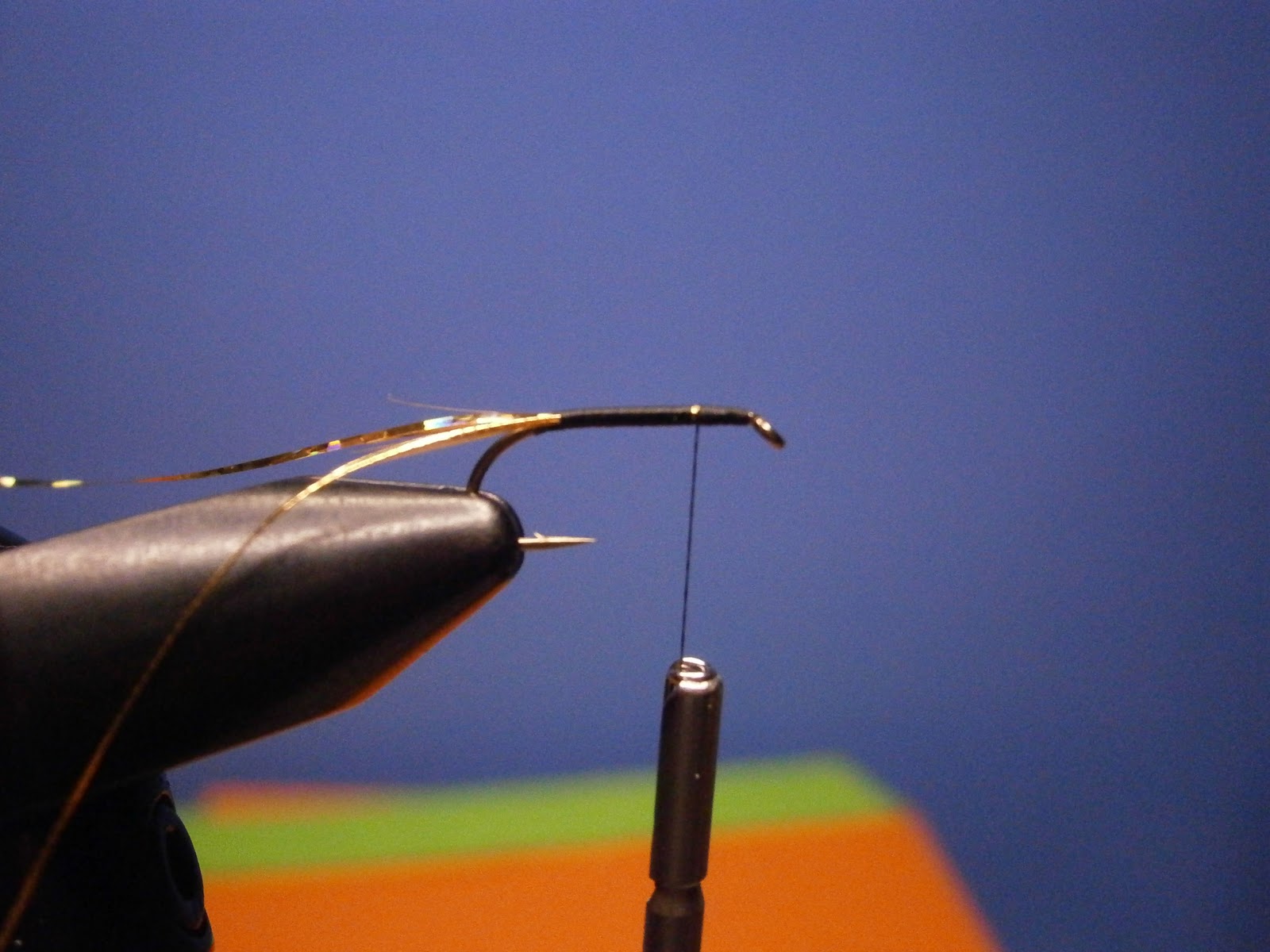
Tie in the wire

Dub the body. You can taper it if you wish. It doesnt matter much.

Tie in the saddle hackle

Palmer the hackle back.

Catch the hackle with the wire and run the rib up to the hackle tie in point. Tie it off, bend and break it off. Carefully break the hackle  off.

I like to take some velcro and bring out the dubbin into the body. If you want it to float high, skip this step.

Nice and roughed up, Run your fingers along the body to coax the hackle and dubbin back.

Select a small clump of wood duck flank.
Tie in the wood duck flank on top of the shank.  Have it extend past the body by a  little less than half a hook shank.

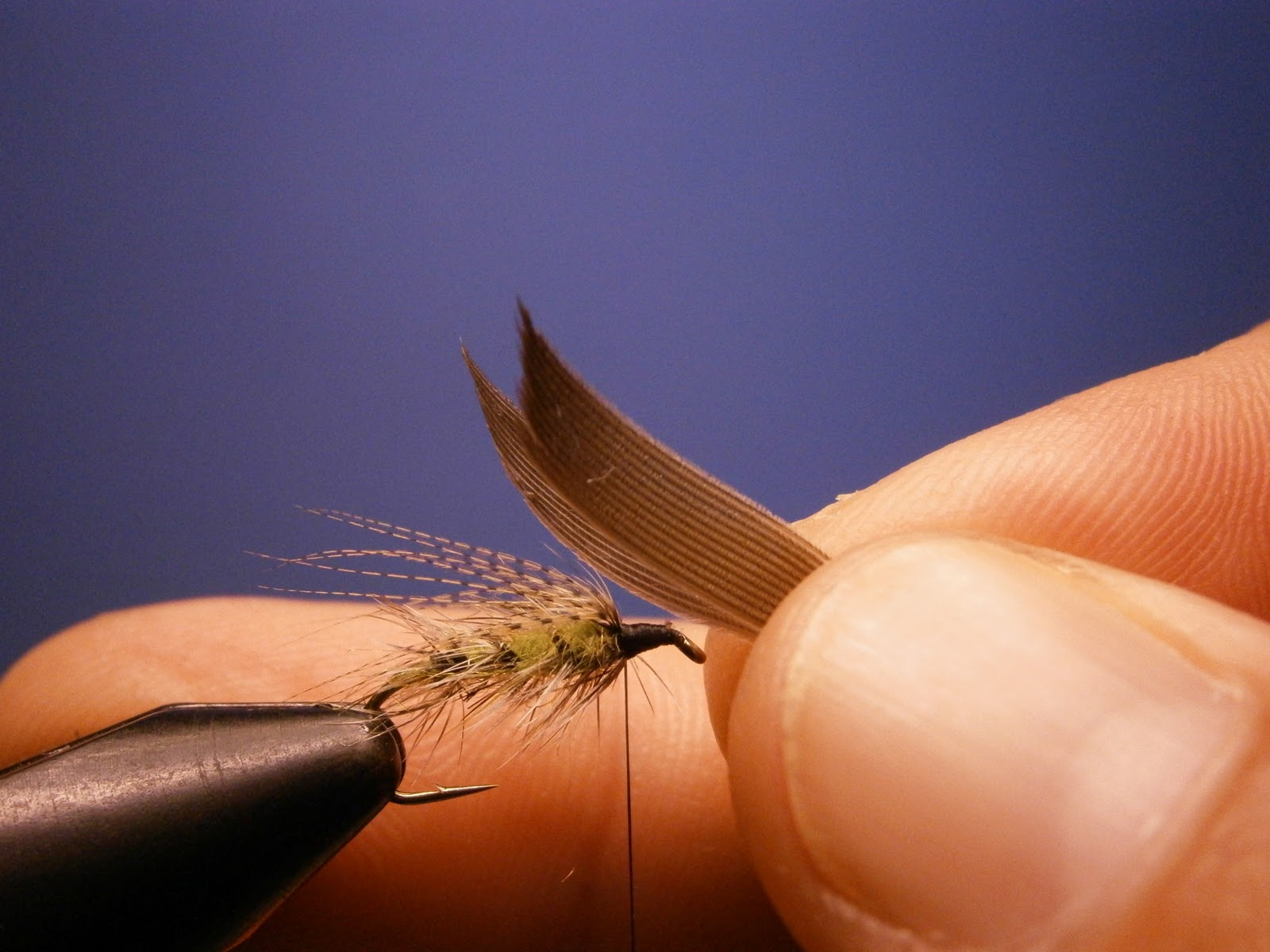
Select two slips of mallard wing fibers. Have them half the with of the gap.

Have the points, pointing towards one another.

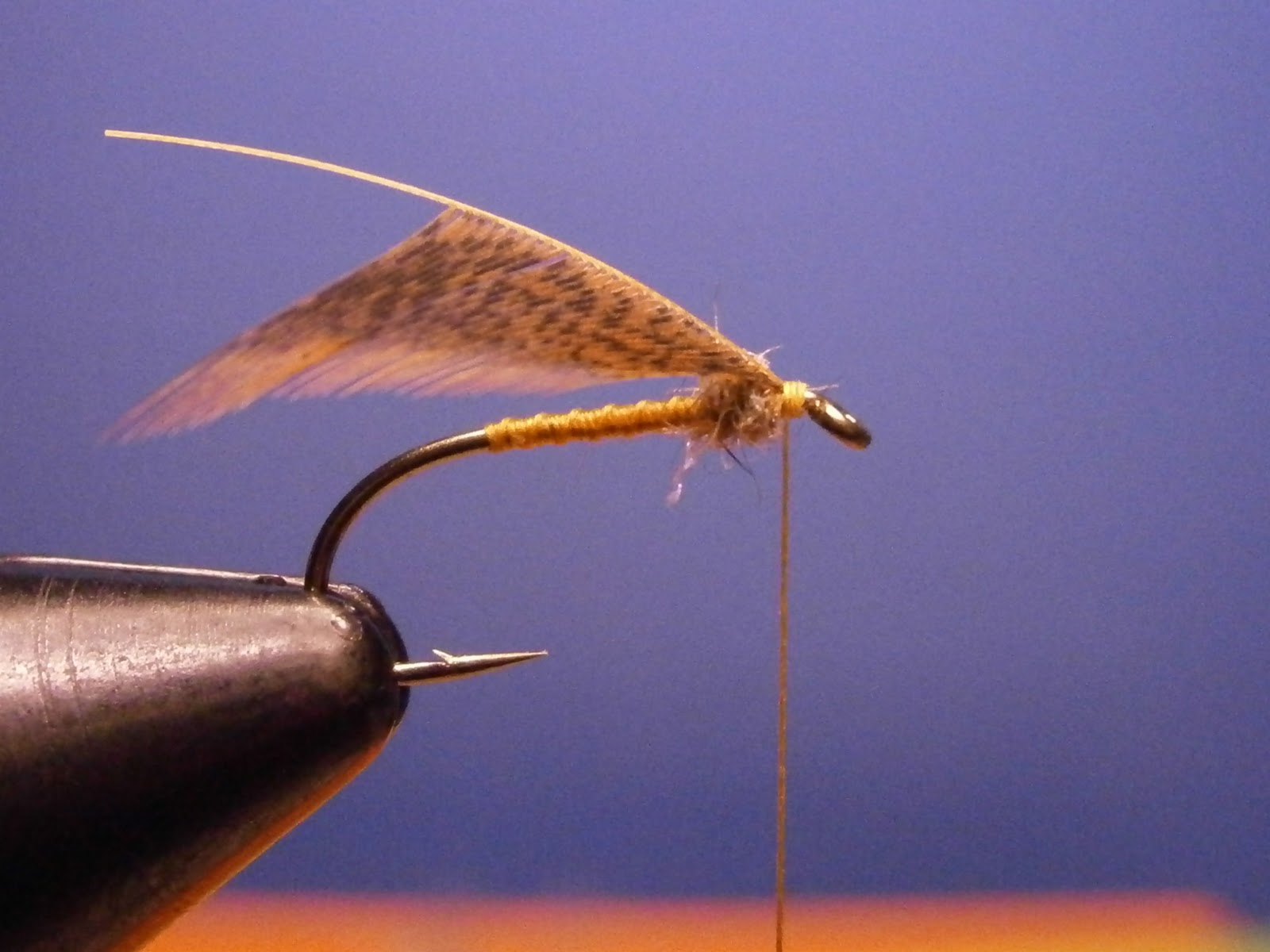
Have the wing extend past the body by a half a hook shank length. Tie them in with the slips tenting the body.

Trim the butts of the mallard, select a ginger hackle. This hackle is from a hen neck. I like to use hen as it will give the fly life in and below the film. If you want a high rider that you can skitter, use a stiff rooster hackle.

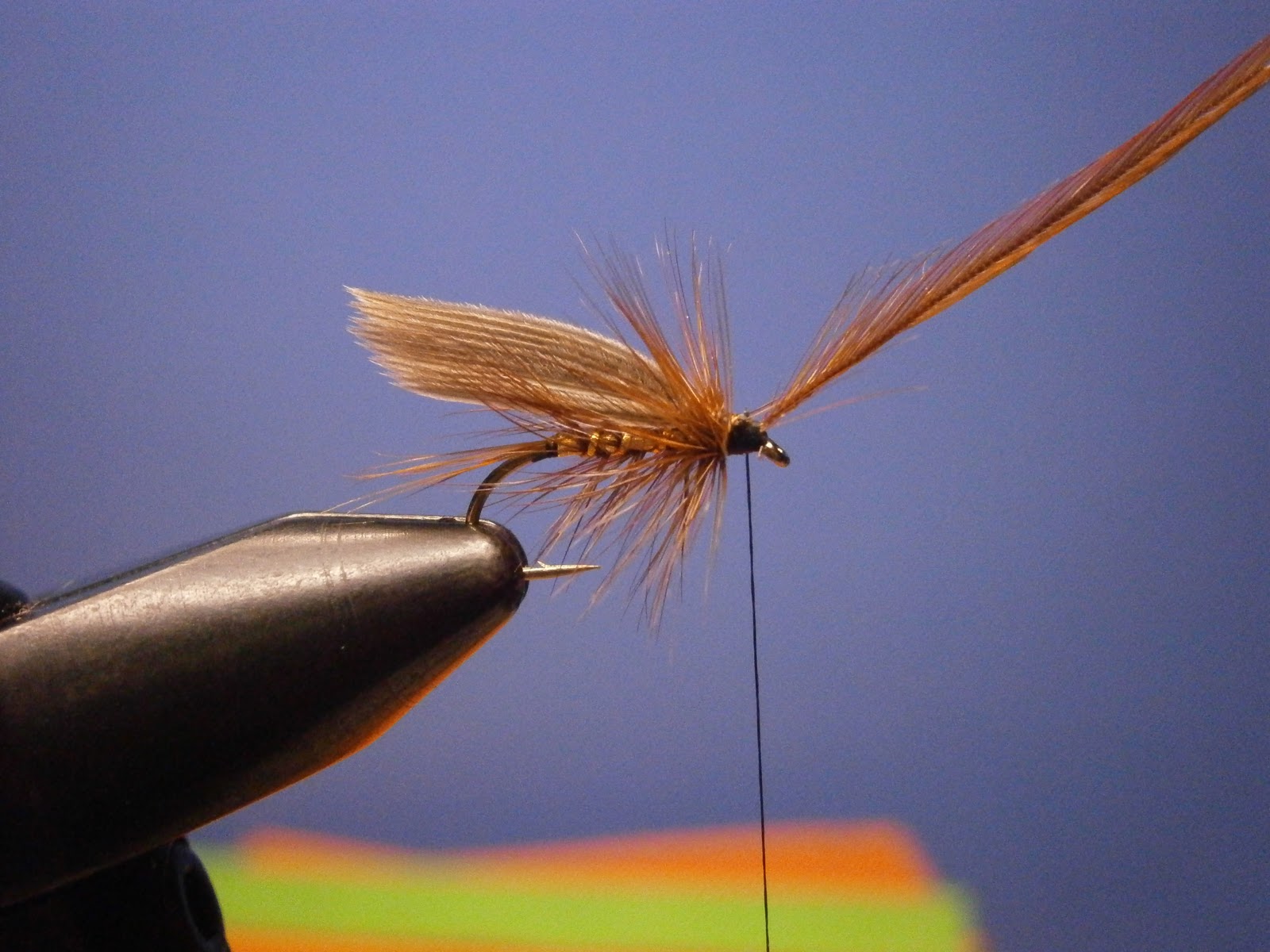
Tie in the hackle feather by the butt.  Snip off the stem. Tidey up. Be sure you have a smooth surface to wrap the hackle on. This is a crucial step to getting a nice hackle collar.

Wind the hackle no more than two turns, you want this collar sparse. Tie it off, clip the excess and form the head. Whip finish.

Give the head a good coat of varnish to shine it up.


Monday, November 28, 2011

Tying the swap fly, #14 aka The Golden Furnace

 This is what i call swap fly #14 or the golden furnace soft hackle.   I tied it using collins hen saddle hackle  furnace. The neck is furnace and saddle is a great molting to it. The hen sets from collins is great deal.
  The  little ball of dubbin in the thorax is uv high test.

The materials. The collins saddle is from a furnace hen. It has great color depth to it. I really dig it. The thread is pearsalls amber gossamer silk thread. The dubbin is u.v. high test.  Use your favorite wet fly hook. I like daiichi 1550s.  Lets twist one up.


Start the thread and wrap to half way on the shank. Touching turns the whole way.


Wax about 3"-4" of thread. 

Wrap the thread back to just past the barb, touching turns, then spiral wrap it back up to where the thread started

Dub the thorax. Just a small ball. This is for helping the hen hackle to stay of the body.  Its optional.

Select a saddle feather and strip one side like so. If you wrap clockwise strip the left side like shown.

Tie in the feather by the tip, stripped side away from you.

Wrap the hackle. Sweep the fibers back as you turn. Take 1 and 1/12 turns.  Tie it off, going towards the eye, then sweep everything back and wrap the thread back to hackle collar. 

Keep the thread tight, and snap off the butt end of the hackle. 

Half hitch the silk thread and clip it off.

Start the black thread at the eye and wrap back to the hackle collar.

Whip finish.

Give the head a nice coating of your favorite varnish. I like to make all my wetfly heads nice and shiny.


Sunday, November 27, 2011

Going small on the ultra egg and the swap fly.

size 20 ultra eggs. Tied on dai-riki 125


I have been twisting up some tiny ultra to fish for on some small streams in my area. I figure the small trout will like them. Who knows, they may see it and  say "awww eggs again!" haha. Not likely. Not because trout dont think like we humans do, but because an egg is just to easy and nutritious of a meal for a trout to pass up.

  When you go small on the ultra just use less yarn and of coarse follow the cardinal rules for tying small flies. Small thread and the least amount of wraps possible.  Follow those two rules and you can tie extremely small, that is if you can see it!  In next couple of months i will show a quite a few midge patterns that i tie small. Some as small as a 28.  I tell ya, there's nothing like landing a 18"+ wild brown on a size 28 hook.   Landing them on size 20 is cake compared to the 28!


 Im in a swap on Pa fly Fish , It's a swap for soft hackles. There is my fly for the swap.   I call it......Swap Fly #14.  As this is my 14 swap i ever did and the fly i tied doesnt have a name. Does it work........You bet your britches it works.  Its tied on a..... well i will do post about it.   I hope to get out in the mid morning as i indicated before. Will do a full report as usual.

Friday, November 25, 2011

Wickham's Fancy and a tutorial

   The Wickham was originally intended as a dry fly for the clear chalk streams of southern England.  This is an old pattern. Dating back to the late 1800's.  Its believed that Dr. T.C. Wickham created the fly. However there are records which disagree with this belief. Records from 1884 state that George Currell was the first professional to have tied it.   I have little doubt that the henryville special was based from this pattern. We all know how deadly the henryville is, But i will attest that the wickhams is equally effective. Its also great fun to tie. I could tie tons of these.  
    The wet fly variation is  a great diving egg laying caddis or sedge pattern.  The hackle will trap air giving the fly a life like shine.  When i tie wickhamss,   I tie them with all different shades of brown.  The one on the left i did with a furnace ginger hen hackles. The hackle is collins "greenwell" hackle. As the name suggests its the right color for greenwell's glory.


Lets twist one up. This one will be the dry version. 
Materials
Hook- Daiichi 1170
Thread- Mtfc black 8/0
Tail- brown/ ginger hackle fibers
Body- Gold tinsel/ Holographic
Body hackle- Brown/ginger saddle hackle palmered
Rib- Gold wire/or French tinsel
Wing- Mallard wing slips
Front hackle- brown/ginger. Neck hackle

Hook in vise, start your thread and lay down a nice even layer of thread, back to just before the barb.

Take 8-12(a small bunch) fibers of hackle for the tail. Tie them on with one turn.

Tie in the tinsel with one turn. This turn should be in front of your last.

Tie in the wire or french tinsel and bring your thread to the eye and back about two hooks length. Be sure to make nice touching turns. You want even body.

Wrap the tinsel, make each turn touch the previous one.  Tie it off and trim the excess.

Tie in the saddle hackle by the butt.

Palmer the hackle back to the rear of the fly.

Catch the hackle with the wire.

Bring the rib up through, tie it off and trim the excess. Break off your hackle .  Roll your fingers over the hackle, stroking it back.

Get your  self two slips of mallard wing. One from the left another from the right.

With the tips lined up, and the "good side" sides of the slips facing out, measure the wing length. It should be just a wee shorter than the tail.

Switch hands, now pinch the slips, be sure they are as close the shank as possible.

Pinch and loop.  Draw the thread down slowly.  Be sure to keep your pinch on the slips. Pinch and loop twice then take a couple of tight turns. Check your wing. You can always go back at this point.

Take a couple more tight tuns and then trim the butts. Nice and close.

Tidey up.

Tie in the hackle by the butt.

Wrap the hackle. Stroking the fibers back with each turn.

Trim the hackle butt and form a neat head.

Whip finish.

Coat the head with your favorite varnish.  You now have a great fish catcher. The Wickham's Fancy.