Showing posts with label Fly tying tutorials. Show all posts

Thursday, March 12, 2020

Leisenring’s black gnat tying tutorial.


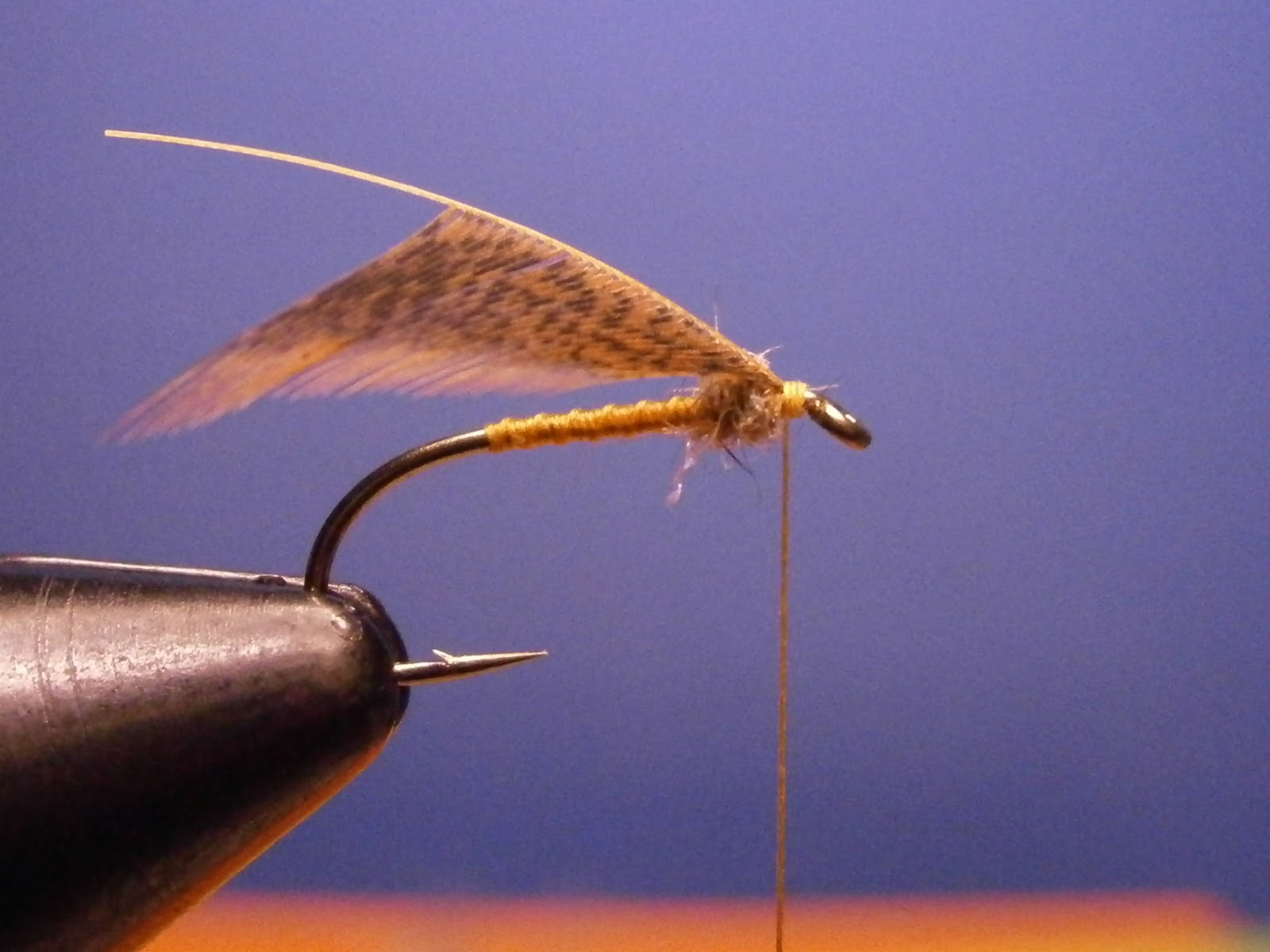
Being that I love wet flies, soft hackles, flymphs, and spiders, I thought why not have a tutorial on tying the black gnat.  The recipe I followed is the one the famous James Leisenring wrote and tied.  With the addition of a thread rib for extra protection. This fly is proven effective time and time again. The fly shows what the famous north country spiders of the u.k. show.  Simplicity for imitation is best.
MATERIALS 
HOOK: Wet fly hook 14-20
THREAD: Claret 
BODY- 2-3 black turkey tail fibers from the top of the tail
HACKLE: purple iridescent starling
RIB: tag end of tying thread. 
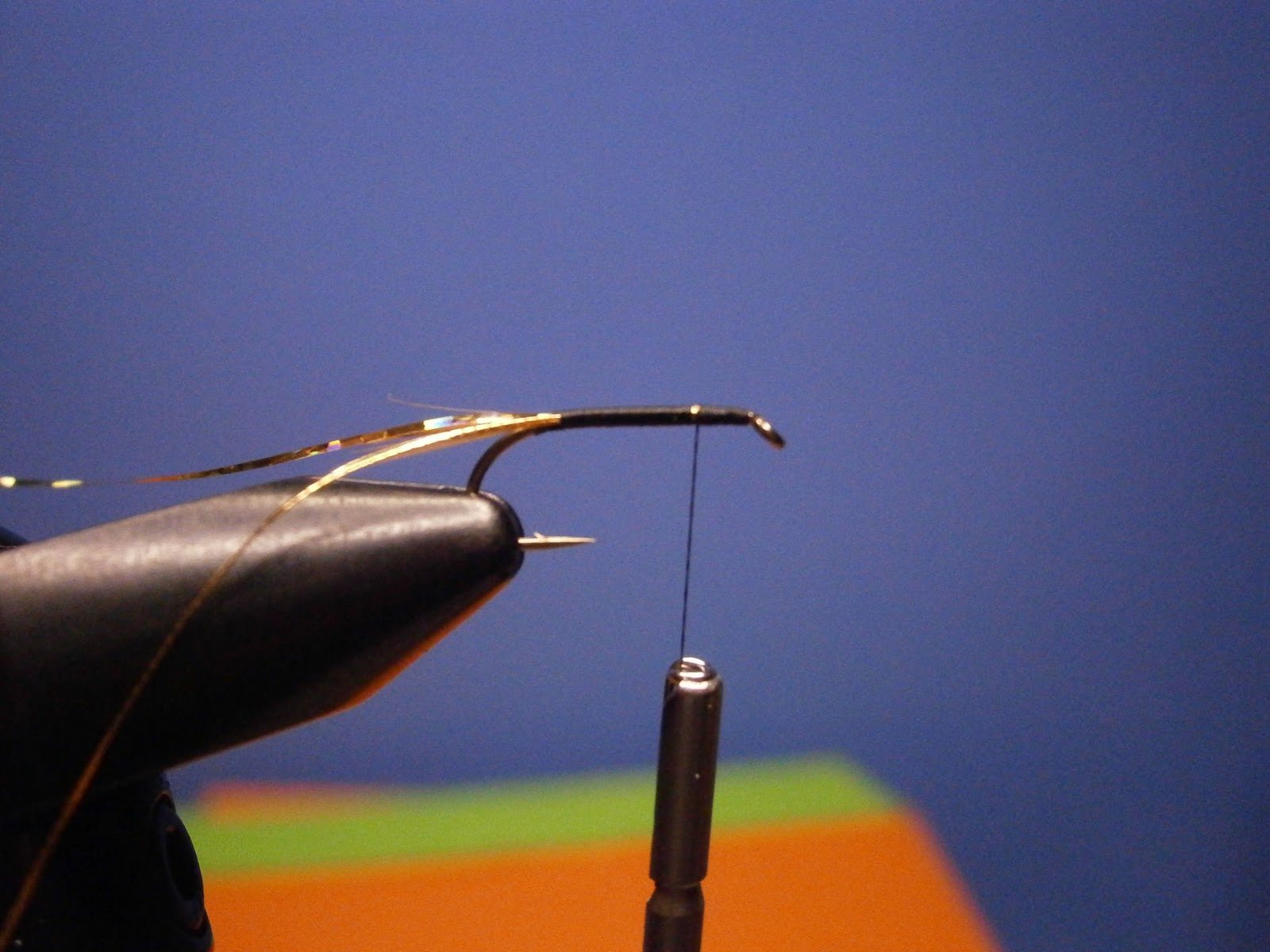
 Start the thread and advance down to the point.
Be sure to wax the thread and don’t remove the thread tag. 
This will be the rib. 
This is the section of tail used for the body. 

Tie in the turkey tail by the tip at the back of the fly. 
Bring the thread forward. Leave a hook eye space. 

Wrap the turkey towards you on the way up.
Catch it in, tie it down and cut the excess. 

Wrap the the tag rib the same way you wrap
the thread. 

Select a starling feather. (Purple is green! Depending on the angle)

Strip away the fluff. 
Leave a bit at the base for a handle. 

Hold the very tip and pull back the fibers

Tie in the tip of hackle on your side with the front of the hackle facing you. 

Wrap the hackle. Touching turns. 

Tuck the stem back and wind back over it. Cut or break it away. 

Whip finish, varnish and the fly is complete.

Thursday, December 8, 2011

Winter midges, Al's Rat


  Al's Rat, is a simple and effective midge pattern you can get. It was devised by the late Al Miller of Pa. He fished the Little Leigh every day. The pattern was designed to imitate the many midge pupa found in this river. It is a fantastic midge pupa any where. Al was a great man and one hell of fisherman. He believed in the theory and design methods of tying in the round.  This of coarse means that all sides of the fly are the same, no matter what way you look, the fly is the same.  I dont limit this pattern to winter. I fish it all year long. 

Monday, November 28, 2011

Tying the swap fly, #14 aka The Golden Furnace

 This is what i call swap fly #14 or the golden furnace soft hackle.   I tied it using collins hen saddle hackle  furnace. The neck is furnace and saddle is a great molting to it. The hen sets from collins is great deal.
  The  little ball of dubbin in the thorax is uv high test.

The materials. The collins saddle is from a furnace hen. It has great color depth to it. I really dig it. The thread is pearsalls amber gossamer silk thread. The dubbin is u.v. high test.  Use your favorite wet fly hook. I like daiichi 1550s.  Lets twist one up.


Start the thread and wrap to half way on the shank. Touching turns the whole way.


Wax about 3"-4" of thread. 

Wrap the thread back to just past the barb, touching turns, then spiral wrap it back up to where the thread started

Dub the thorax. Just a small ball. This is for helping the hen hackle to stay of the body.  Its optional.

Select a saddle feather and strip one side like so. If you wrap clockwise strip the left side like shown.

Tie in the feather by the tip, stripped side away from you.

Wrap the hackle. Sweep the fibers back as you turn. Take 1 and 1/12 turns.  Tie it off, going towards the eye, then sweep everything back and wrap the thread back to hackle collar. 

Keep the thread tight, and snap off the butt end of the hackle. 

Half hitch the silk thread and clip it off.

Start the black thread at the eye and wrap back to the hackle collar.

Whip finish.

Give the head a nice coating of your favorite varnish. I like to make all my wetfly heads nice and shiny.


Friday, November 25, 2011

Wickham's Fancy and a tutorial

   The Wickham was originally intended as a dry fly for the clear chalk streams of southern England.  This is an old pattern. Dating back to the late 1800's.  Its believed that Dr. T.C. Wickham created the fly. However there are records which disagree with this belief. Records from 1884 state that George Currell was the first professional to have tied it.   I have little doubt that the henryville special was based from this pattern. We all know how deadly the henryville is, But i will attest that the wickhams is equally effective. Its also great fun to tie. I could tie tons of these.  
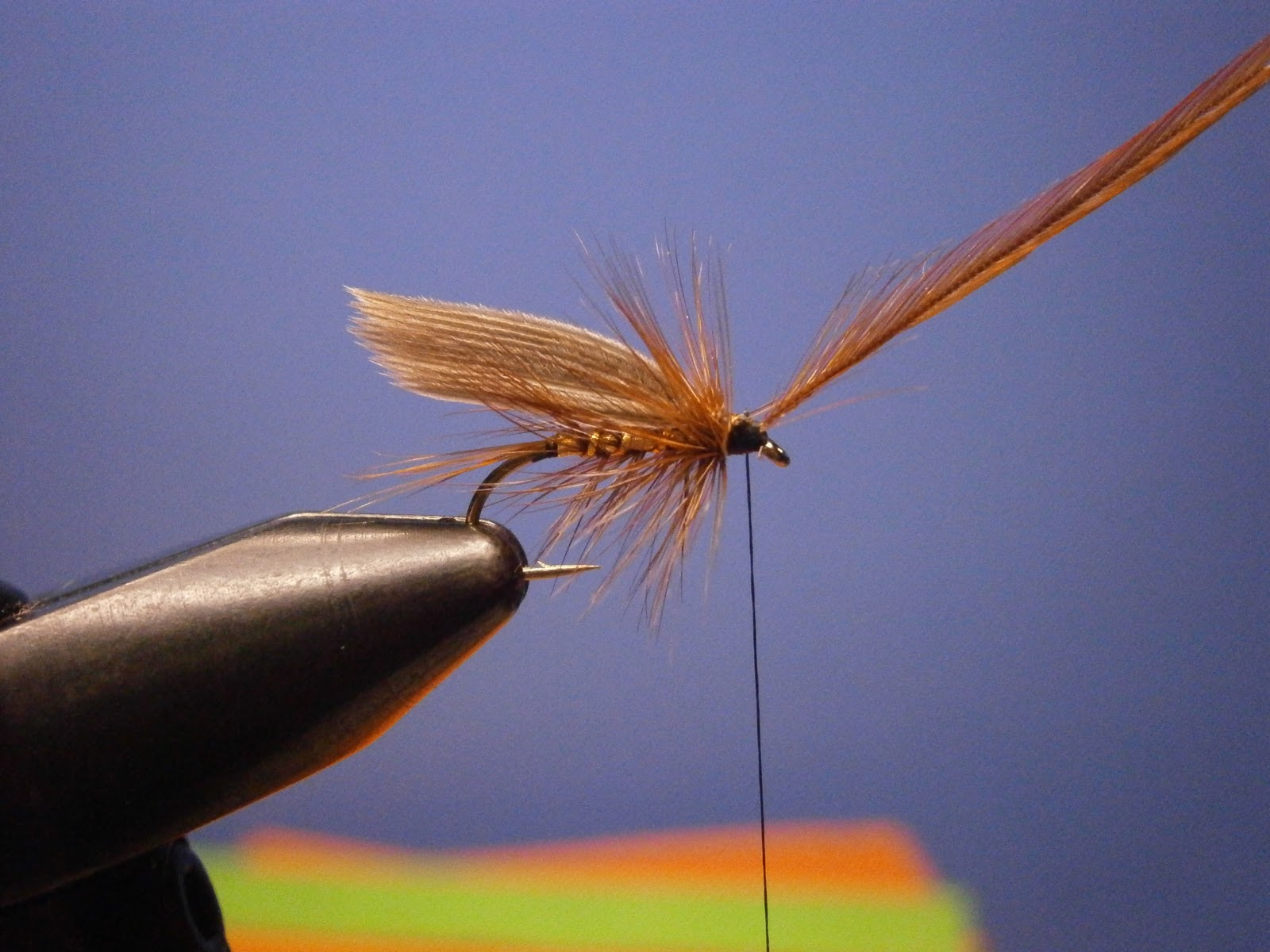
    The wet fly variation is  a great diving egg laying caddis or sedge pattern.  The hackle will trap air giving the fly a life like shine.  When i tie wickhamss,   I tie them with all different shades of brown.  The one on the left i did with a furnace ginger hen hackles. The hackle is collins "greenwell" hackle. As the name suggests its the right color for greenwell's glory.


Lets twist one up. This one will be the dry version. 
Materials
Hook- Daiichi 1170
Thread- Mtfc black 8/0
Tail- brown/ ginger hackle fibers
Body- Gold tinsel/ Holographic
Body hackle- Brown/ginger saddle hackle palmered
Rib- Gold wire/or French tinsel
Wing- Mallard wing slips
Front hackle- brown/ginger. Neck hackle

Hook in vise, start your thread and lay down a nice even layer of thread, back to just before the barb.

Take 8-12(a small bunch) fibers of hackle for the tail. Tie them on with one turn.

Tie in the tinsel with one turn. This turn should be in front of your last.

Tie in the wire or french tinsel and bring your thread to the eye and back about two hooks length. Be sure to make nice touching turns. You want even body.

Wrap the tinsel, make each turn touch the previous one.  Tie it off and trim the excess.

Tie in the saddle hackle by the butt.

Palmer the hackle back to the rear of the fly.

Catch the hackle with the wire.

Bring the rib up through, tie it off and trim the excess. Break off your hackle .  Roll your fingers over the hackle, stroking it back.

Get your  self two slips of mallard wing. One from the left another from the right.

With the tips lined up, and the "good side" sides of the slips facing out, measure the wing length. It should be just a wee shorter than the tail.

Switch hands, now pinch the slips, be sure they are as close the shank as possible.

Pinch and loop.  Draw the thread down slowly.  Be sure to keep your pinch on the slips. Pinch and loop twice then take a couple of tight turns. Check your wing. You can always go back at this point.

Take a couple more tight tuns and then trim the butts. Nice and close.

Tidey up.

Tie in the hackle by the butt.

Wrap the hackle. Stroking the fibers back with each turn.

Trim the hackle butt and form a neat head.

Whip finish.

Coat the head with your favorite varnish.  You now have a great fish catcher. The Wickham's Fancy.